→ UPCOMING
EXHIBITION
Birgit Jürgenssen:
Rupture
Curated by Gabriele Schor
co-curator Natascha Burger
official opening: December 12, 2026
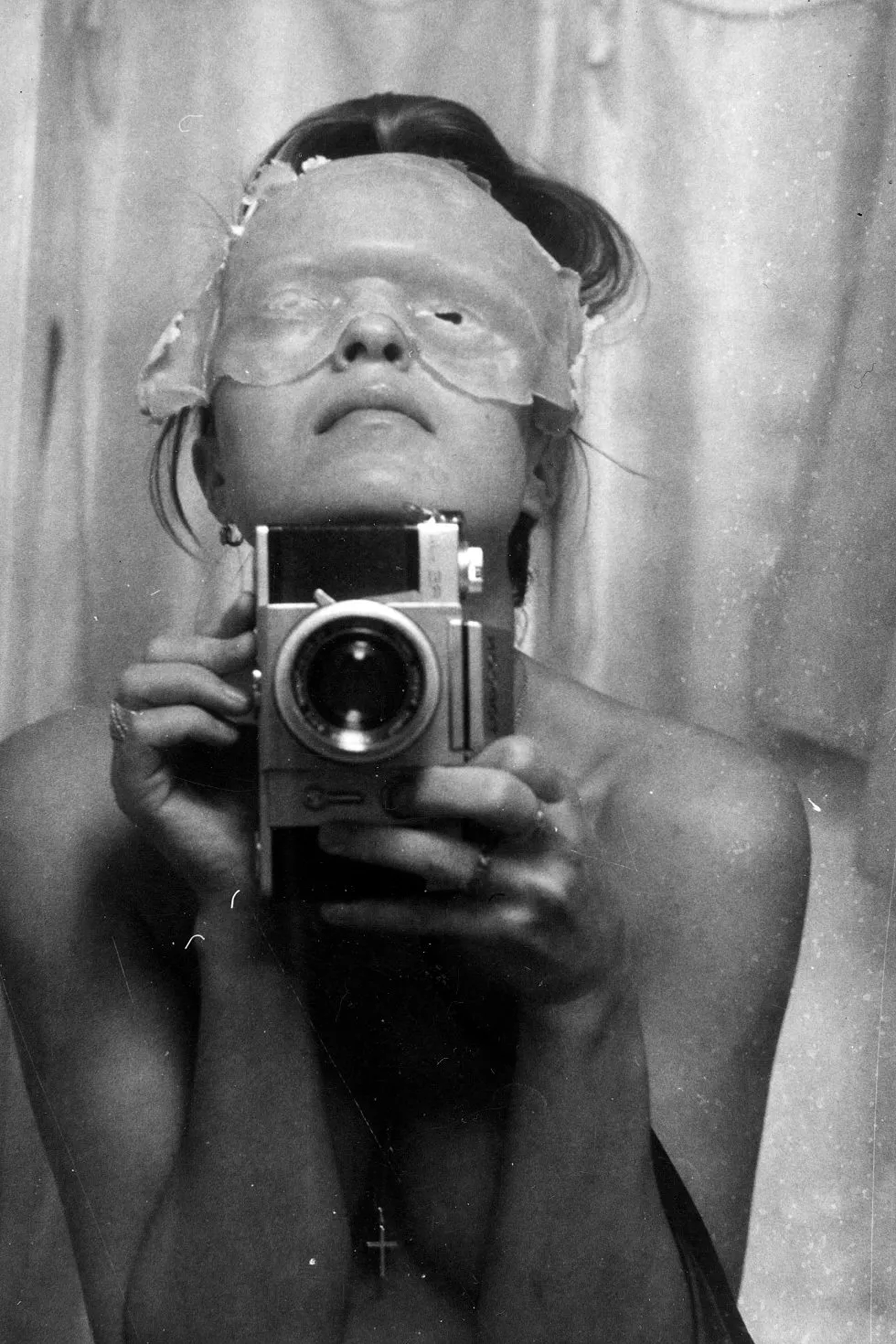
Be very creative, refuse your role
Birgit Jürgenssen
With its comprehensive posthumous retrospective of Birgit Jürgenssen (1949–2003), Muzeum Susch presents the Austrian avant-garde artist's first exhibition in Switzerland, revealing a richly layered and visionary body of work spanning four decades.
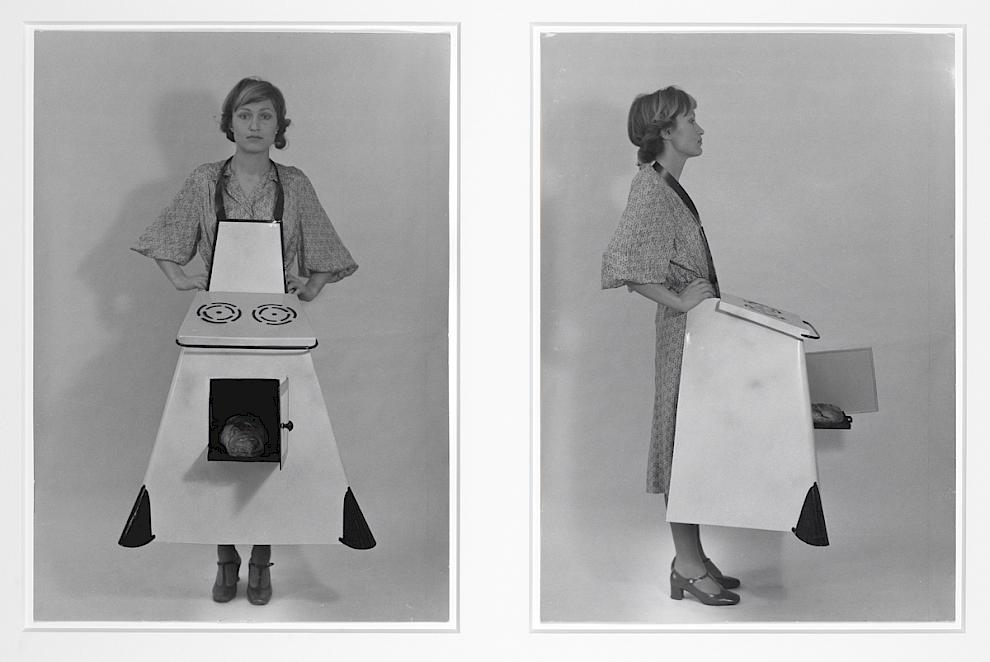
Jürgenssen was among the outstanding artists who, beginning in the 1970s, challenged rigid stereotypes, dismantled cultural constructs, and responded with incisive intelligence to the social debates of their time. ‘Be very creative, refuse your role.’ was one of her guiding principles. Though she died at the age of fifty-four, she left behind an astonishingly dense oeuvre that reveals an artist in a state of perpetual thought and creation.
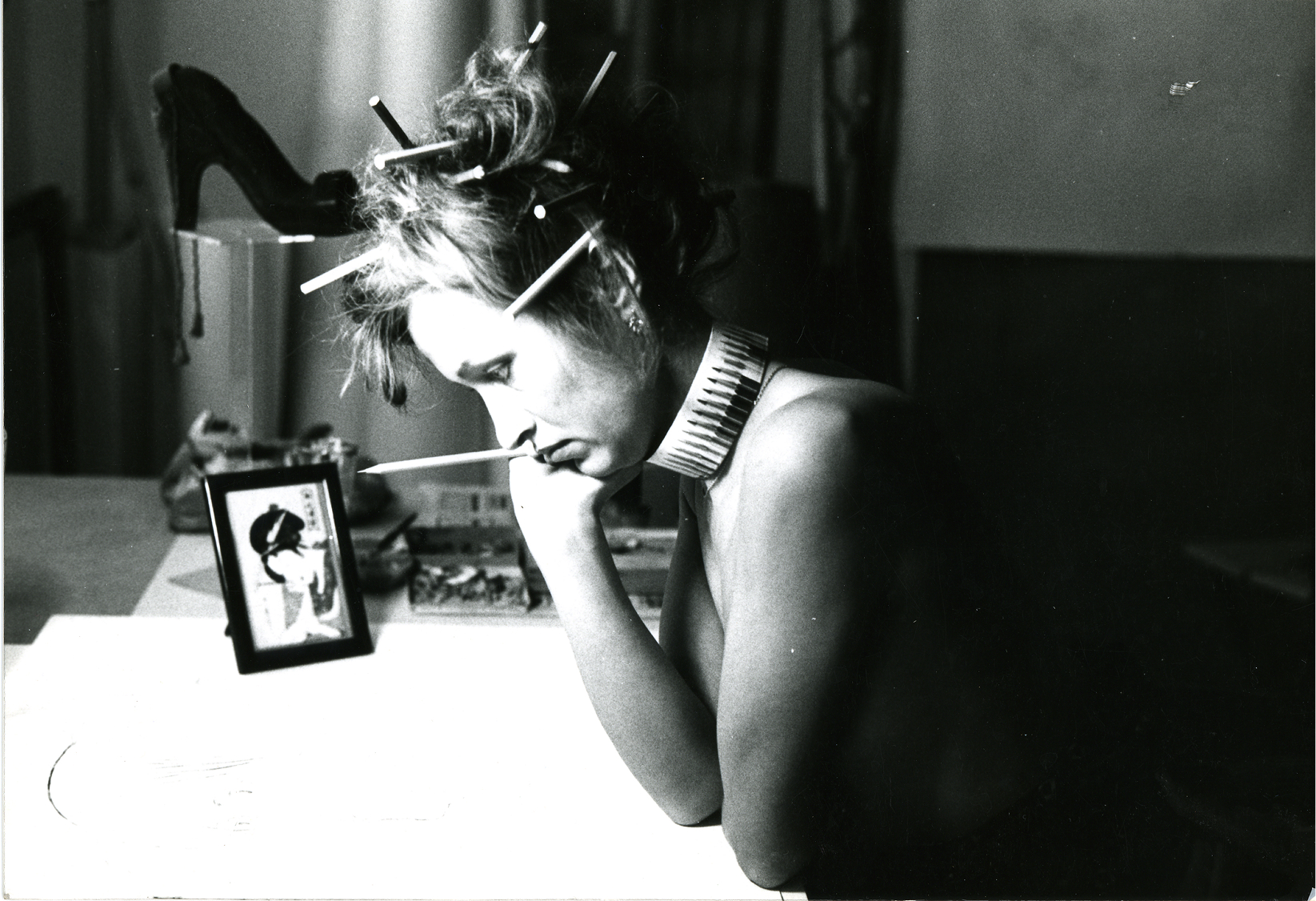
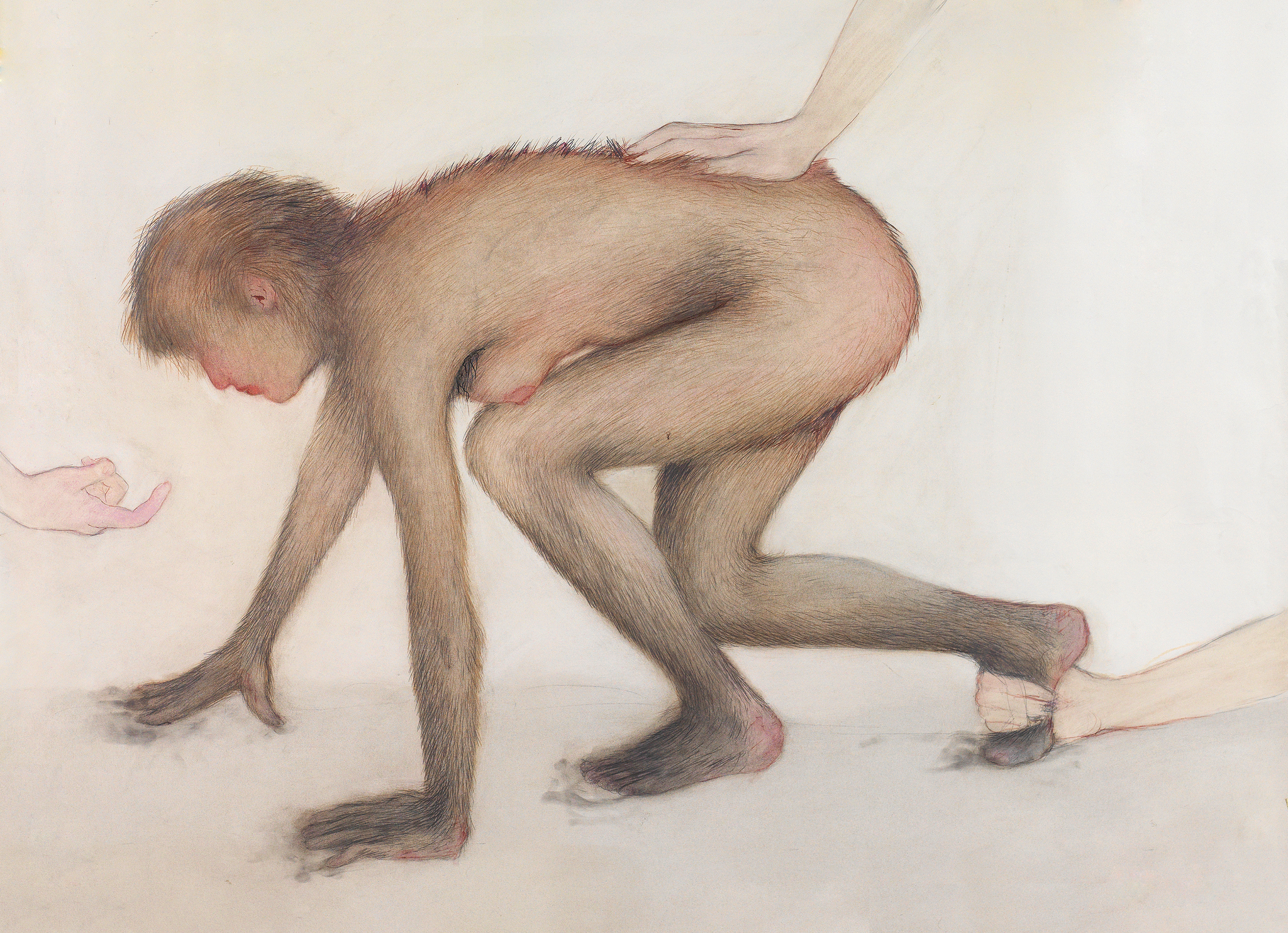
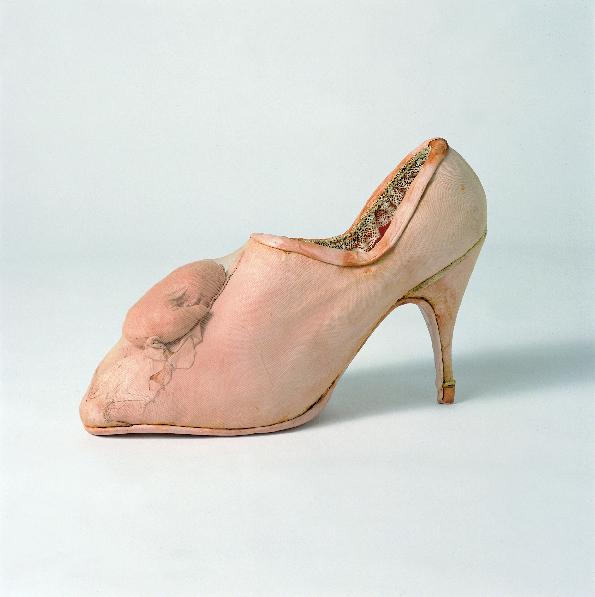
Jürgenssen's gift for transformation and her subversive sense of humour permeate works that probe questions of identity, masquerade, socially conditioned gender relations, and human intimacy. Her recurring metamorphoses and manifold transformations draw on the Surrealist fascination with shifting the boundary between human and animal, reflecting both her deep connection to nature and her persistent attempts to free herself from social constraints. This multifaceted oeuvre resists any straightforward classification within traditional artistic genres. Rather than cultivating a recognisable signature style, Jürgenssen insisted on the freedom to experiment beyond academic rules and established visual conventions, refusing to confine either herself or her art. Her singular practice encompasses an extraordinary range of drawings and experimental photographs, while painting, sculpture, and video also became essential media through which she gave form to her inexhaustible imagination.
The camera—her constant companion and, until the end of her life, her most important means of expression—enabled Jürgenssen's inward and outward reflections on ‘the gaze and the invisible,’ as she herself described it. Throughout her work, the female body—often her own—became both image and projection surface: fragmented, fetishised, and continually reimagined. The struggle to break free from rigid stereotypes found expression in her delicate drawings as well as in her provocative photographic series. Always positioned both in front of and behind the camera, Jürgenssen became at once observer and observed.
The artist referred to a remarkable group of works created in the late 1980s and early 1990s as her Stoffarbeiten (‘fabric works’)—a dreamlike cycle of visual invention. Photographs, solarisations, and multiple exposures were assembled into cinematic sequences and veiled in gauze, forming seductive compendia that concealed their own secrets. As so often in Jürgenssen's work, they both diverted and challenged the act of seeing itself. These complex photographic works reveal her deep engagement with Constructivism and Formalism, as well as with Surrealist iconography and experimental practice. At once unpredictable and profoundly informed, Jürgenssen moved through her time with an apparent elegance that belied the radical force of an oeuvre whose urgency remains strikingly contemporary.
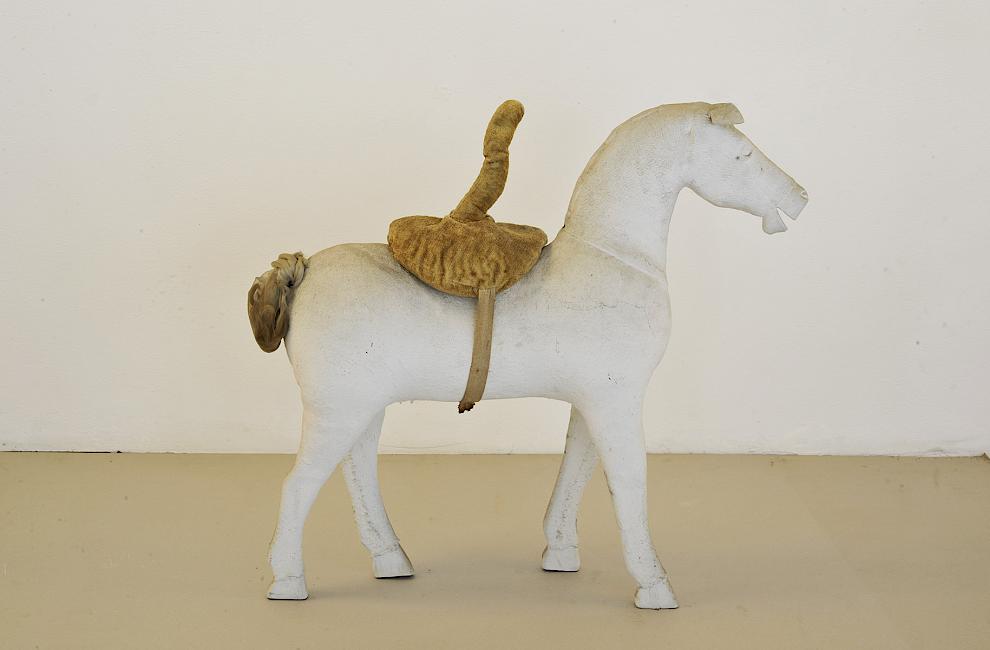
The retrospective brings together around 150 works, including many rarely or never before exhibited. Rather than following a strictly chronological narrative, the exhibition unfolds across twelve interconnected galleries organised thematically, allowing Jürgenssen's ‘wild thinking,’ as she called it, and her ‘art from the in-between realm’ to emerge through a dynamic interplay of ideas and motifs, revealing the richness and heterogeneity of her practice.
Curated by Gabriele Schor (Founding Director of SAMMLUNG VERBUND, Vienna) and co-curated by Natascha Burger (Director of the Estate Birgit Jürgenssen, Vienna), the exhibition brings together works from the collection of Muzeum Susch founder Grażyna Kulczyk, SAMMLUNG VERBUND, Vienna, the Estate Birgit Jürgenssen, and private lenders.
The exhibition is accompanied by a substantial publication of the same title, published by Hatje Cantz, featuring essays by Christian Alandete, Natascha Burger, Raphael Gygax, Fumina Hamasaki, Stefanie Hessler, Grażyna Kulczyk, Marta Papini, Gabriele Schor, and Agnieszka Sosnowska.
Birgit Jürgenssen (1949–2003) was born in Vienna in 1949. At the age of eight, she combined her name with that of the Spanish master in a schoolbook to ‘BICASSO Jürgenssen’ and began taking photographs in 1963. After completing her high school diploma in 1967, Jürgenssen spent several months in Paris. She was subsequently accepted into Prof. Franz Herbert’s masterclass for graphics at the University of Applied Arts in Vienna, from which she graduated in 1971. In 1975, she took part in the exhibition „MAGNA – Feminismus, Kunst und Kreativität“, curated by VALIE EXPORT. Three years later, the artist presented her first institutional solo exhibition, “Lineaturen”, at the Albertina in Vienna. In 1981 “10 Tage 100 Fotos”, the first exhibition at the Galerie Hubert Winter opened, leading to a long-standing collaboration. A year later Birgit Jürgenssen began teaching at the Academy of Fine Arts in Arnulf Rainer’s masterclass. There she established the department of photography and taught until the end of her life. Over the course of her career, spanning more than 40 years, Birgit Jürgenssen participated in numerous solo and group exhibitions, including the 1998 retrospective “Früher oder Später” at the Oberösterreichischen Landesmuseum in Linz, as well as curating the Austrian contribution to the 8th International Biennale in Cairo. Birgit Jürgenssen died on 25 September 2003 in Vienna.
Gabriele Schor studied philosophy at the University in Vienna and at the University of California in San Diego. She worked at the Tate Gallery in London, was Art Correspondent for the Neue Zürcher Zeitung and taught art criticism at universities in Austria. In 2004 Gabriele Schor was appointed as founding director of the international VERBUND COLLECTION in Vienna. She created an important focus on feminist art of the 1970s. She coined the term ‘Feminist Avant-Garde’ and established this term in the arthistorical discourse to highlight the pioneering role of these artists. The collection has two more themes: ‘the Perception of Spaces and Places’ and ‘Gender, Identity and Diversity’. Schor published i.a. the first monographs on the Austrian artists Birgit Jürgenssen and Renate Bertlmann, monographs on Francesca Woodman, ORLAN and Louise Lawler. Schor also worked three years with Cindy Sherman on the artist’s catalogue raisonné of her early works and published the compendium ‘Feminist Avant-Garde’. Her most recent show she curated was ‘Care Matters’ at the Albertina, Vienna (2026).
Natascha Burger studied art history at the University of Vienna, the University of Münster as well as the Aix-Marseille University. Since 2009, she has been the managing director of the Birgit Jürgenssen Estate, where she is responsible for the entire archive, as well as senior director of the Galerie Hubert Winter in Vienna. Having previously worked at various galleries specializing in contemporary art, she was also a member of staff in the poster collection at the Austrian National Library in Vienna. In 2018, she was co-editor of the publication ‘Birgit Jürgenssen. Ich bin.’ (together with Nicole Fritz), and co-curator of the solo exhibition of the same name at the Kunsthalle Tübingen, Germany, the GAMeC Bergamo, Italy, the Louisiana Museum in Denmark and the Weserburg in Bremen, Germany. Burger has contributed to an array of publications, as well as penning articles for several catalogues and art magazines.
International press:
Sutton Comms, London
Sara Kietzmann: sara@suttoncomms.com